
February 8 - Prince Hall (1735-1807)
Whatever the origins of how Prince Hall became a free man, all sources agree that after a certain point in time Prince Hall was free- and not only was he free, but he was a property owner and registered voter. As was commonly true for that period in time, records regarding the birth dates and genealogical heritage of Black people, especially those in slavery, were not kept.
Petitions, Petitions, and more Petitions
Even if historians can’t agree on Prince Hall’s origins, thankfully Prince Hall was so politically active that much of what is known for certain about him can be verified through his petitions. Following the Declaration of Independence, “Prince Hall’s petition writing for social justice began in 1777 with his request to the General Court to give slaves their freedom, a right to every person. In this petition, of January 13, 1777, Prince Hall called to the government to be held accountable for ripping many Africans out of their homeland.” Prince Hall argued America’s Revolutionists' own arguments against them, challenging the government to “stand by the principles it stands for, ‘a natural and unalienable right to that freedom, which the great parent of the Universe hath bestowed equally on all Mankind.’ This petition calls for the freedom of all children, as well as other slaves not free, born in a land of liberty to receive their freedom at the age of 21. Through his writing he wishes to correct the inconsistencies in the State, and feels compelled to assure that justice is attained for all.”
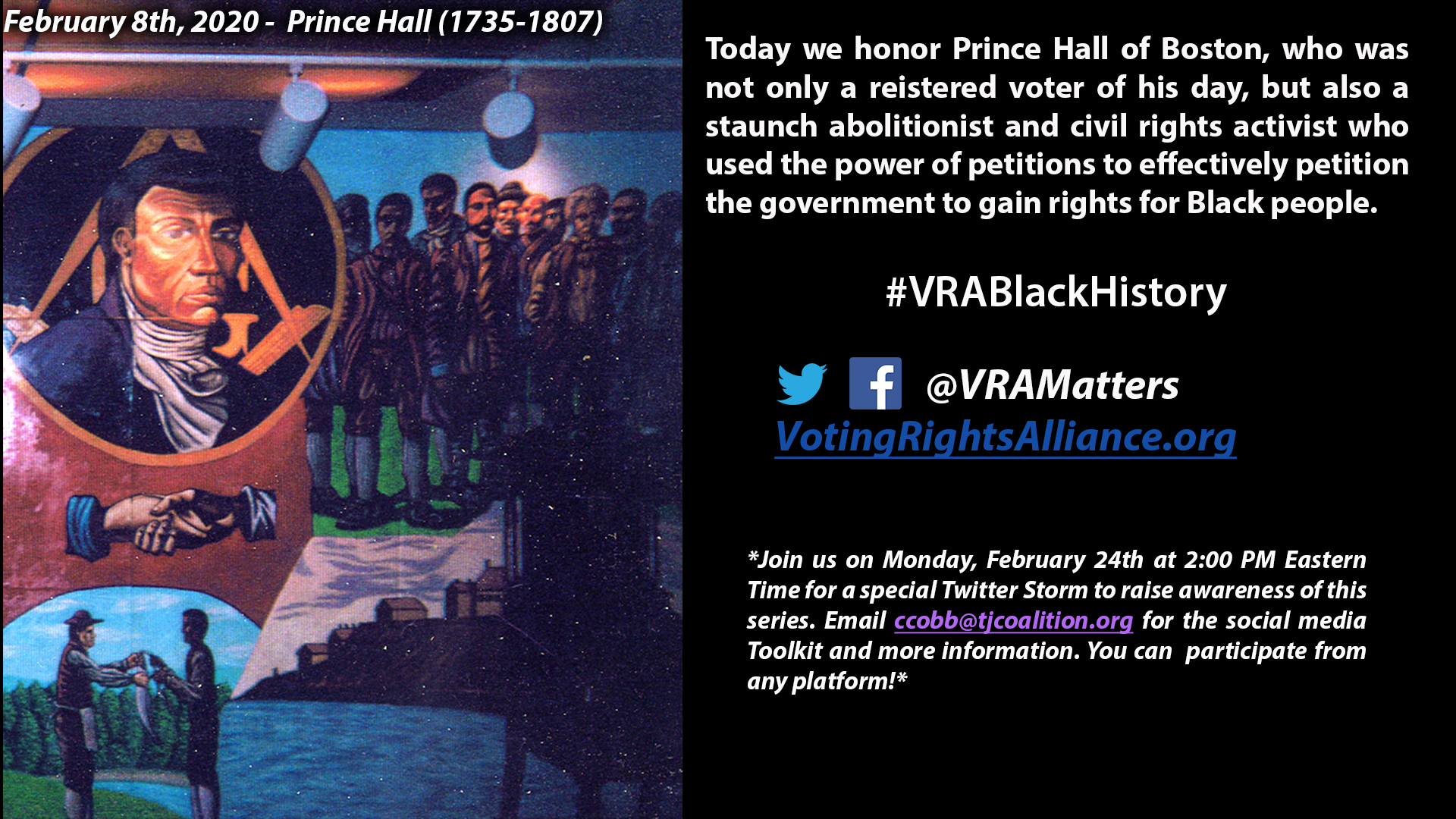
Today we honor Prince Hall of Boston, who was not only a registered voter of his day, but a staunch abolitionist and civil rights activist who used the power of petitions to effectively petition the government to gain rights for Blacks. This article exemplified the complexities of the fight for Black suffrage during a colonial era built on the immoral institution of slavery.