#VRABlackHistory
For the 4th year in a row, the Transformative Justice Coalition and the Voting Rights Alliance, in honor of Black History Month, are publishing a daily special series devoted to sharing the legacies and stories of the sheroes, heroes, and events in the fight for Black suffrage. This series incorporates social media posts, daily newsletters, and website blog posts to spread the word broadly.
In addition to 11 NEW articles this year, the series is starting off its first 7 days with stories of Black women involved in the Women's Suffrage Movement in honor of the 100th Year Anniversary of the 19th Amendment, even though many African American women were not able to vote until the passage of the Voting Rights Act of 1965.
We encourage everyone to share this series to your networks and on social media under the hashtag #VRABlackHistory. You can also tweet us @VRAmatters to share your own facts.
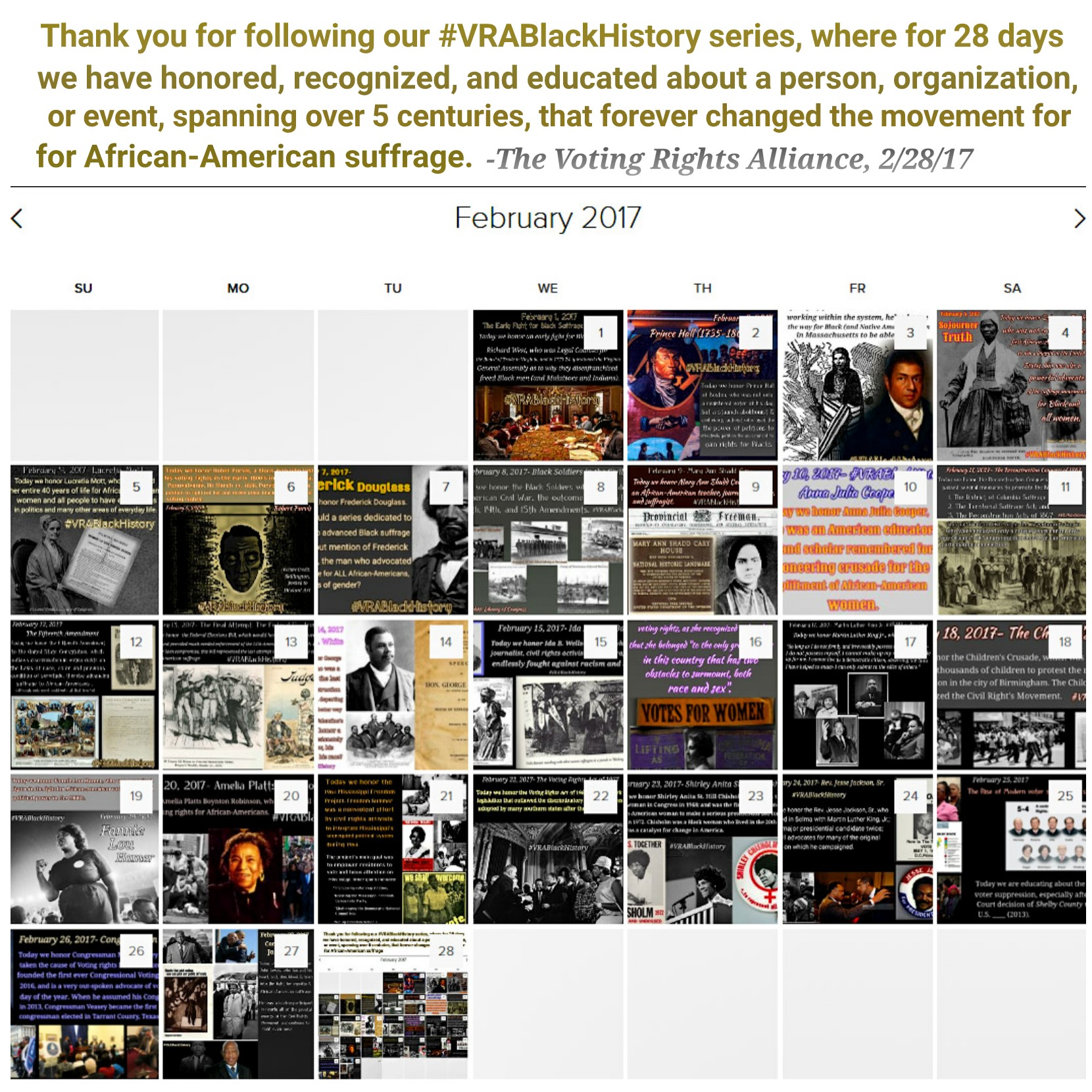
Today, February 28, on this last day of Black History Month, we end of the #VRABlackHistory Series with a special two-part extended edition as we honor The Transformative Justice Coalition and educate about what you can do to advance voting rights.
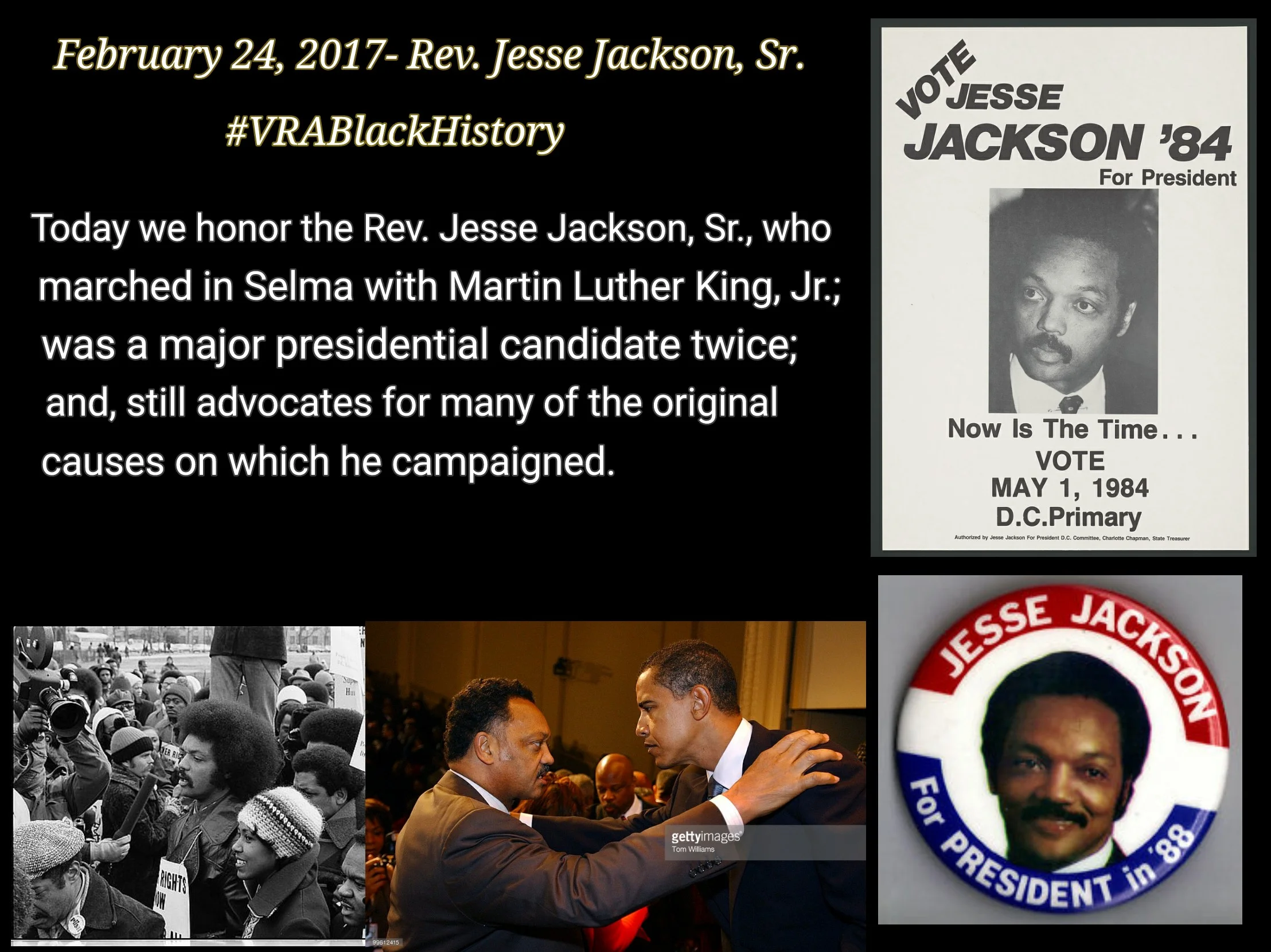
Today, February 24, 2017, we honorthe Reverend Jesse Jackson, Sr. The Reverend Jesse Jackson, Sr. marched in Selma with Martin Luther King, Jr.; was a major-party presidential candidate twice; and, still advocates for many of the original causes on which he campaigned.
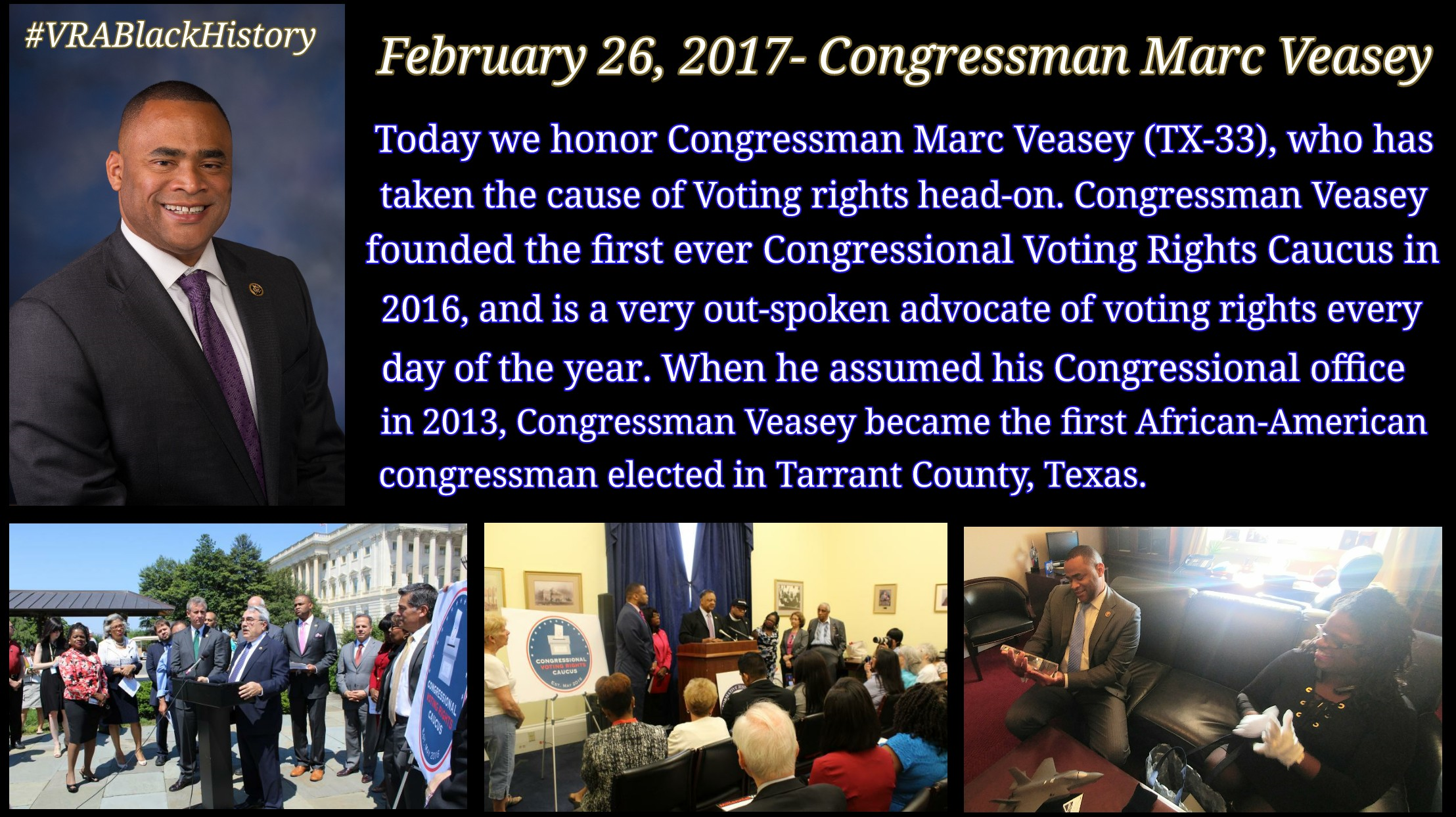
Today we honor Congressman Marc Veasey, first African-American congressman elected in Tarrant County, Texas, and founder of the first ever Congressional Voting Rights Caucus in 2016.
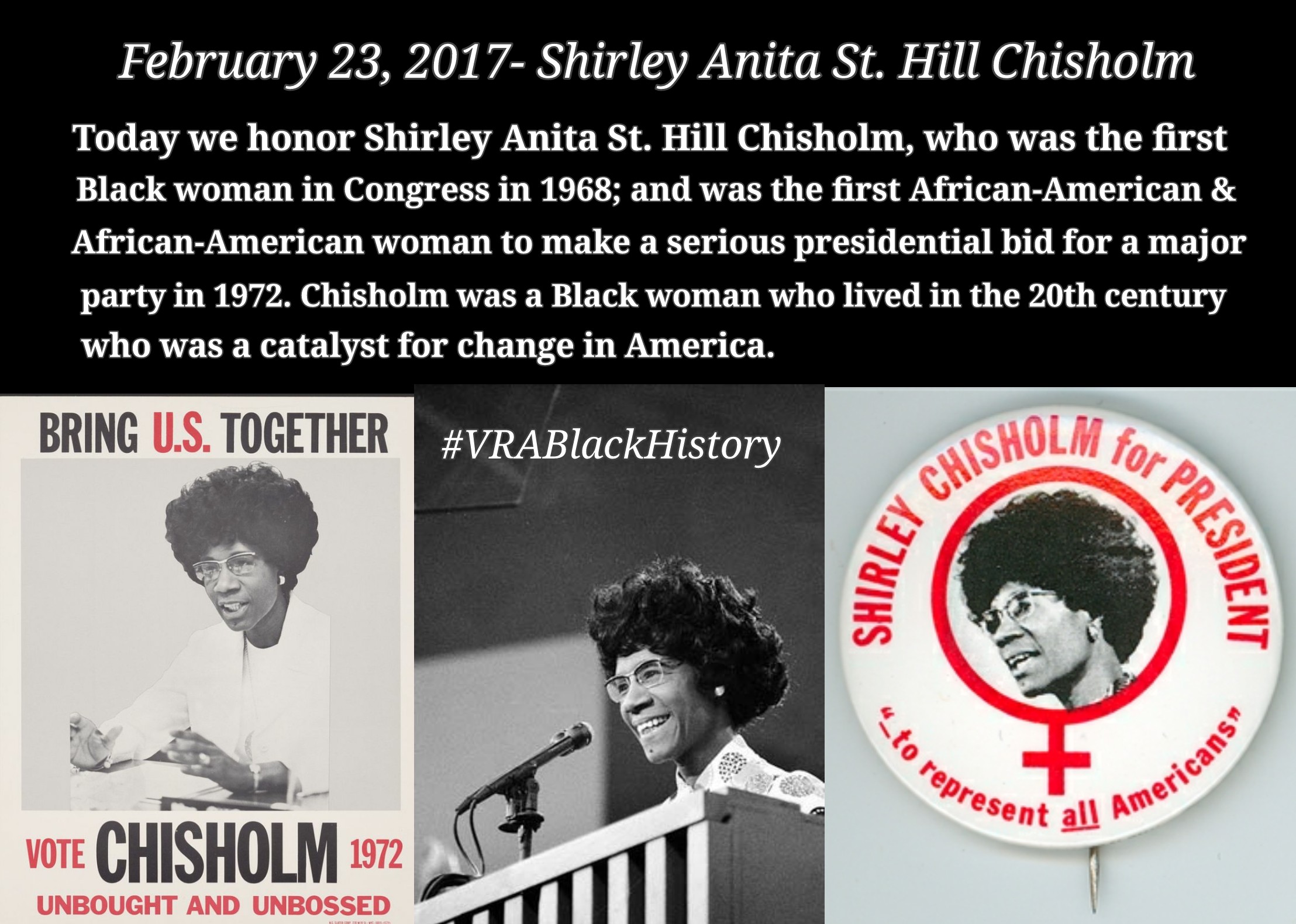
Today, February 23, 2017, we honor Shirley Anita St. Hill Chisholm, who was the first African-American woman in Congress in 1968; and, was the first African-American and African-American woman to make a serious presidential bid for a major party in 1972.
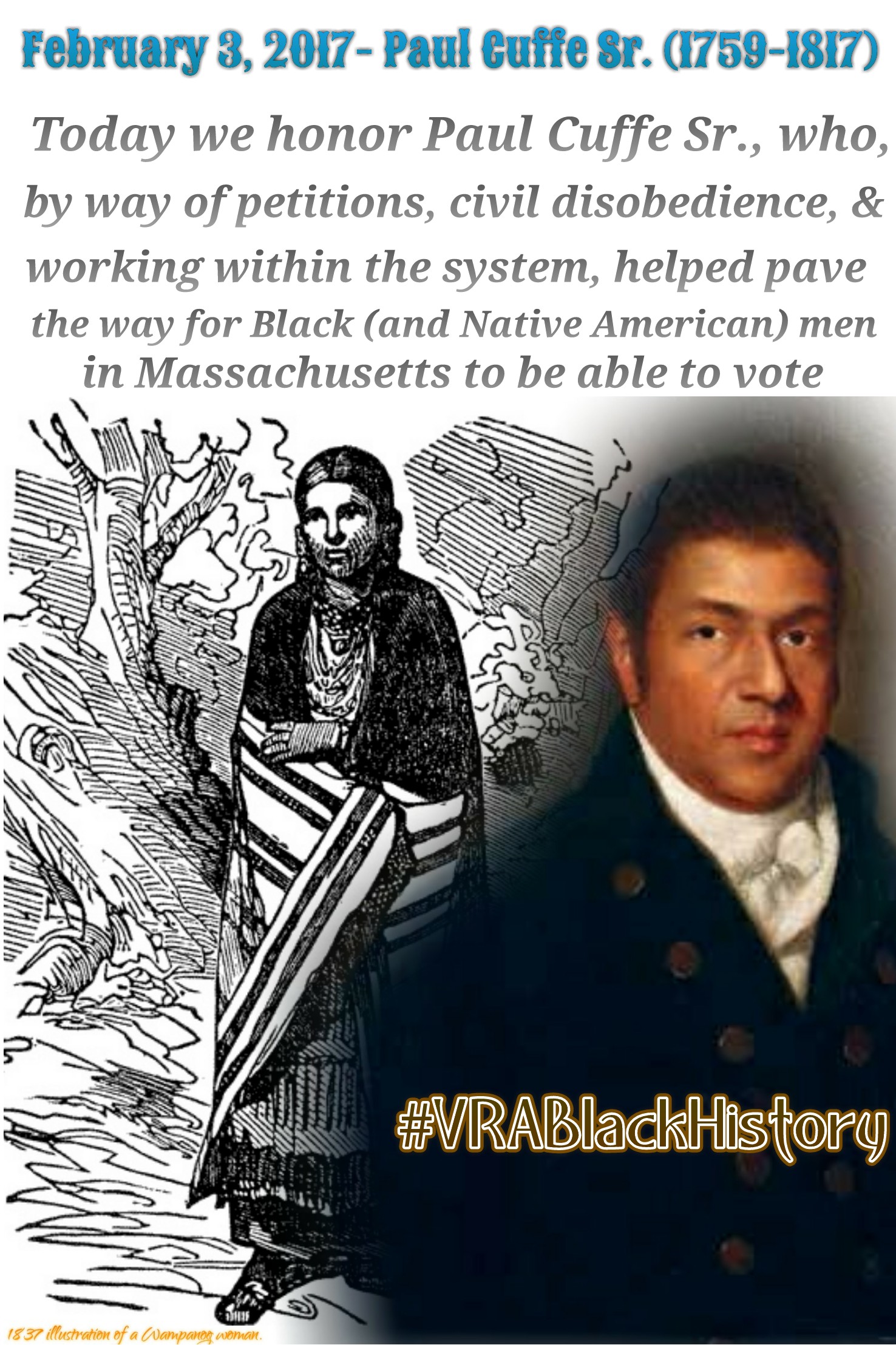
Today we honor Paul Cuffe Sr, who, by way of petitions, civil disobedience, and working within the system, helped pave the way for Black (and Native American) men in Massachusetts to be able to vote.
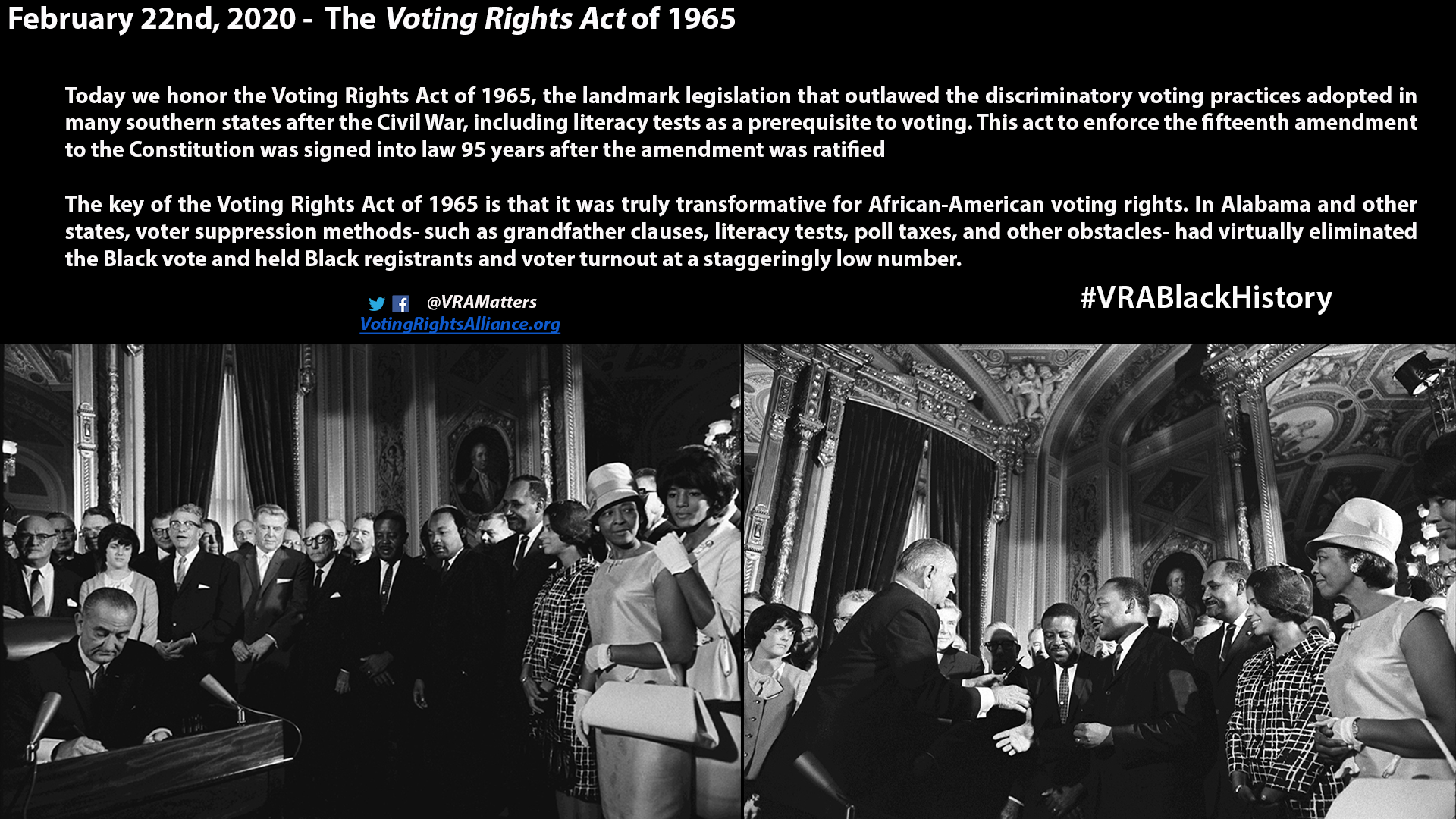
Today we honor the Voting Rights Act of 1965, the landmark legislation that outlawed the discriminatory voting practices adopted in many southern states after the Civil War, including literacy tests as a prerequisite to voting. This 'act to enforce the fifteenth amendment to the Constitution' was signed into law 95 years after the amendment was ratified.
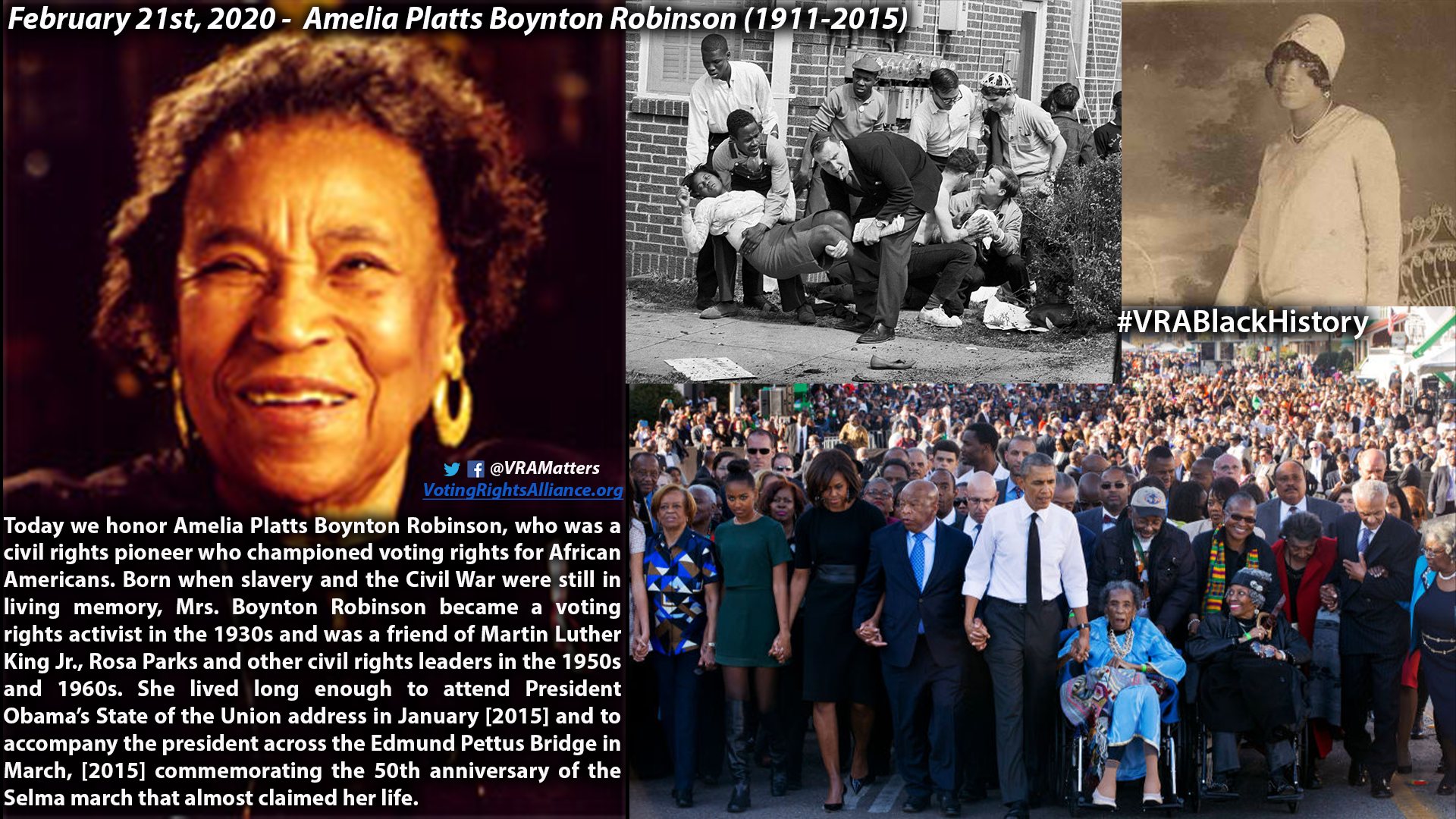
Today we honor Amelia Platts Boynton Robinson, a voting rights activist in the 1930s and a friend of Martin Luther King Jr., Rosa Parks and other civil rights leaders in the 1950s and 1960s.
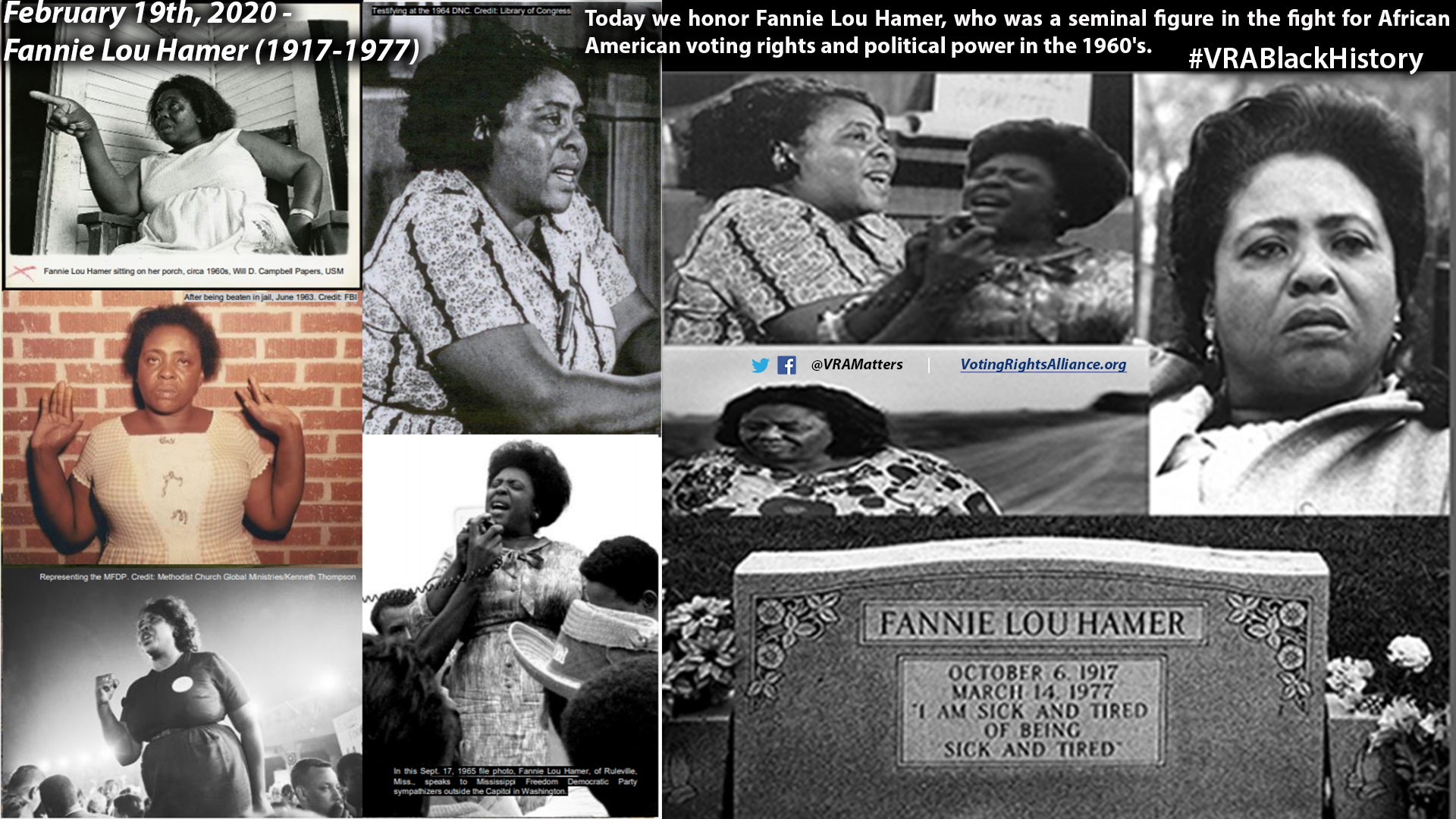
Today we honor Fannie Lou Hamer, who was a seminal figure in the fight for African American voting rights and political power in the 1960's.
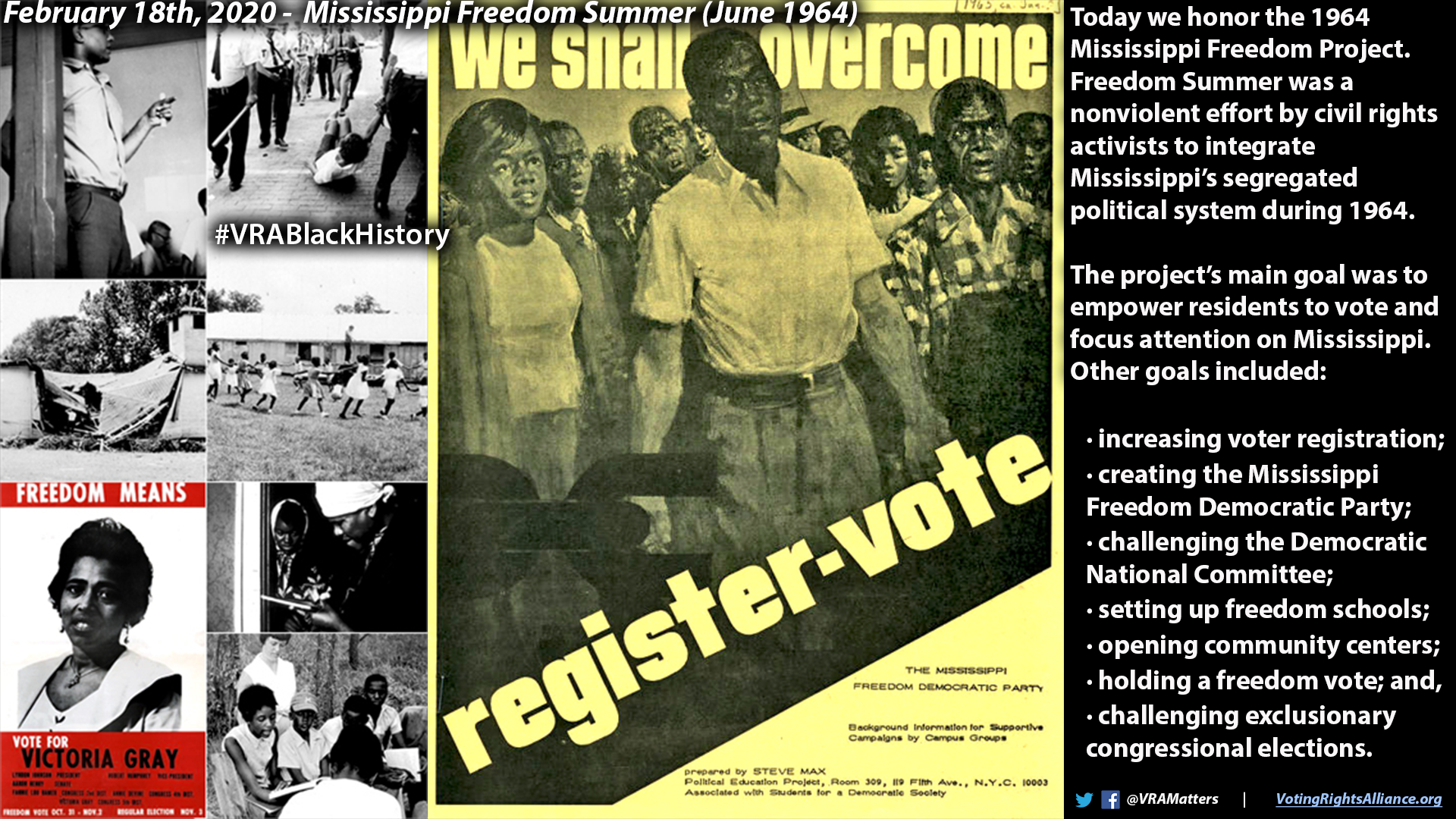
Today we honor the 1964 Mississippi Freedom Summer project, an organized a voter registration drive aimed at dramatically increasing voter registration in Mississippi.
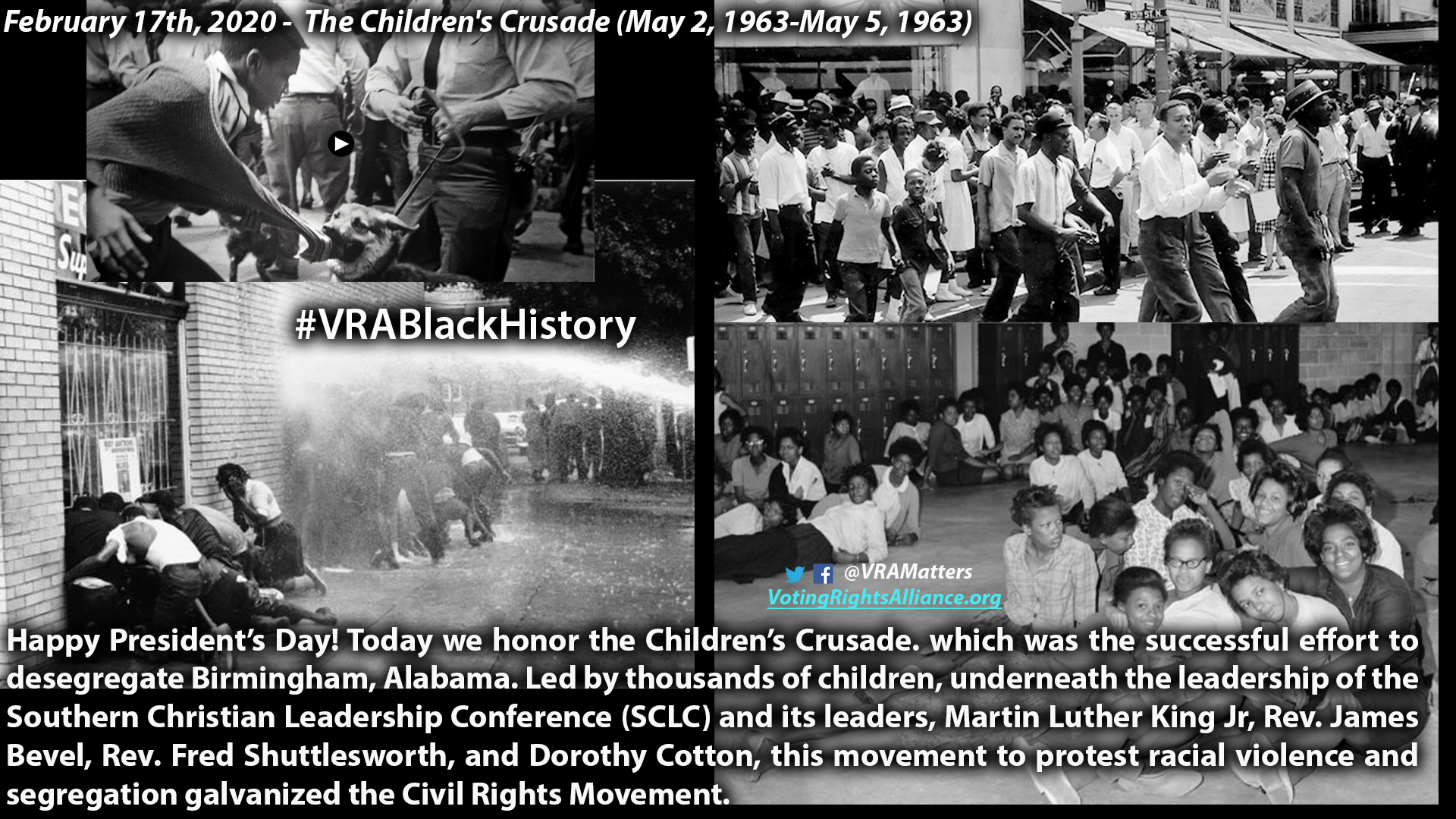
Happy President’s Day! Today we honor the Children’s Crusade, which was the successful effort to desegregate Birmingham, Alabama.
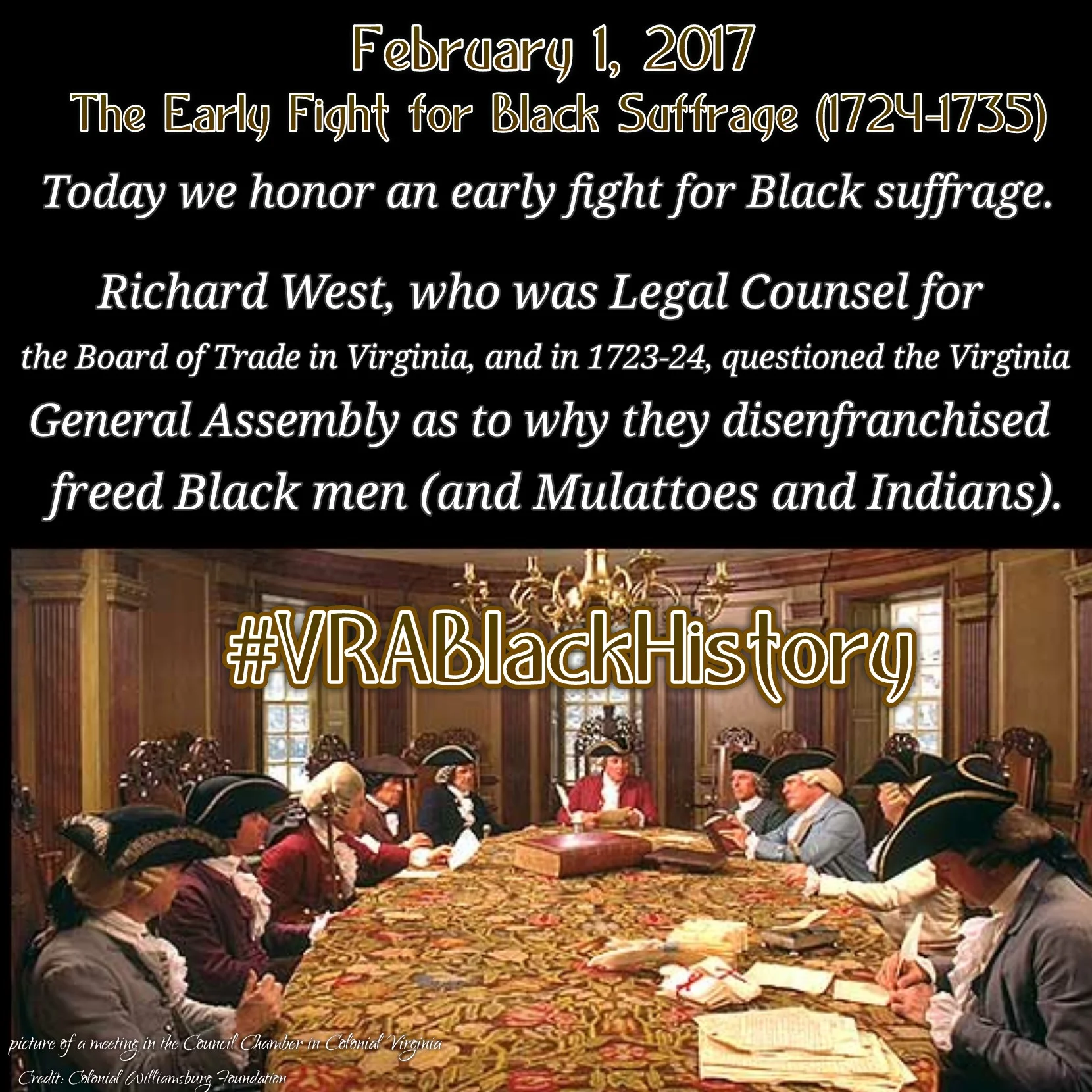
The Early Fight for Black Suffrage (1724-1735). Today we honor an early fight for Black suffrage. In 1723-1724, Richard West, who was Legal Counsel for the Board of Trade, questioned the Virginia General Assembly as to why they took away voting rights from freed Black men.
Today we honor George H. White, who was a lawyer and a Republican African American Congressman from North Carolina’s Second Congressional District (1899-1901).
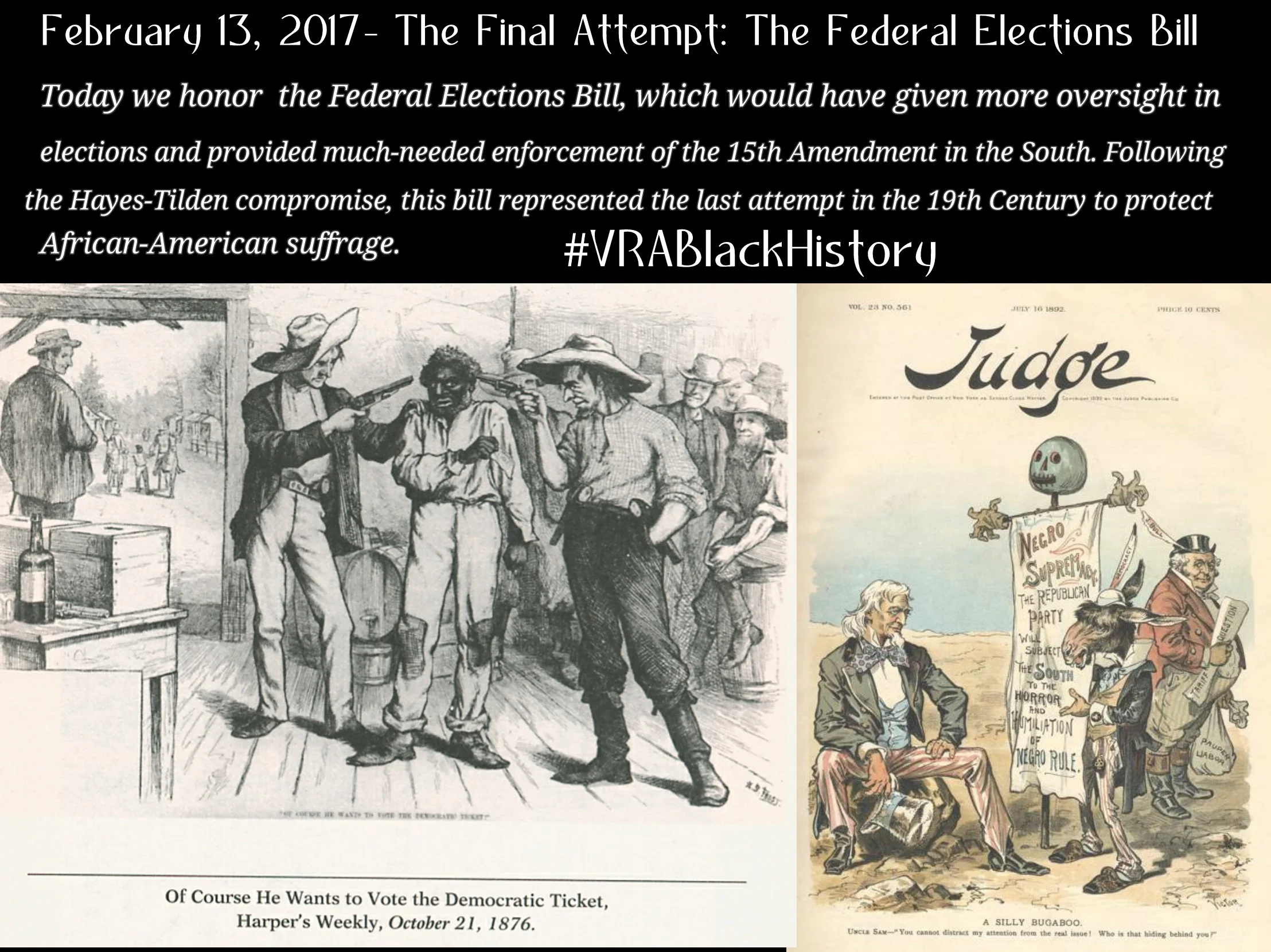
Today, we honor the Federal Elections Bill (also known as “The Lodge Bill, or to its opponents “The Force Bill"). Following the 1877 Hayes-Tilden compromise, this bill represented the last attempt by the U.S. Congression the 19th Century to protect African-American suffrage.
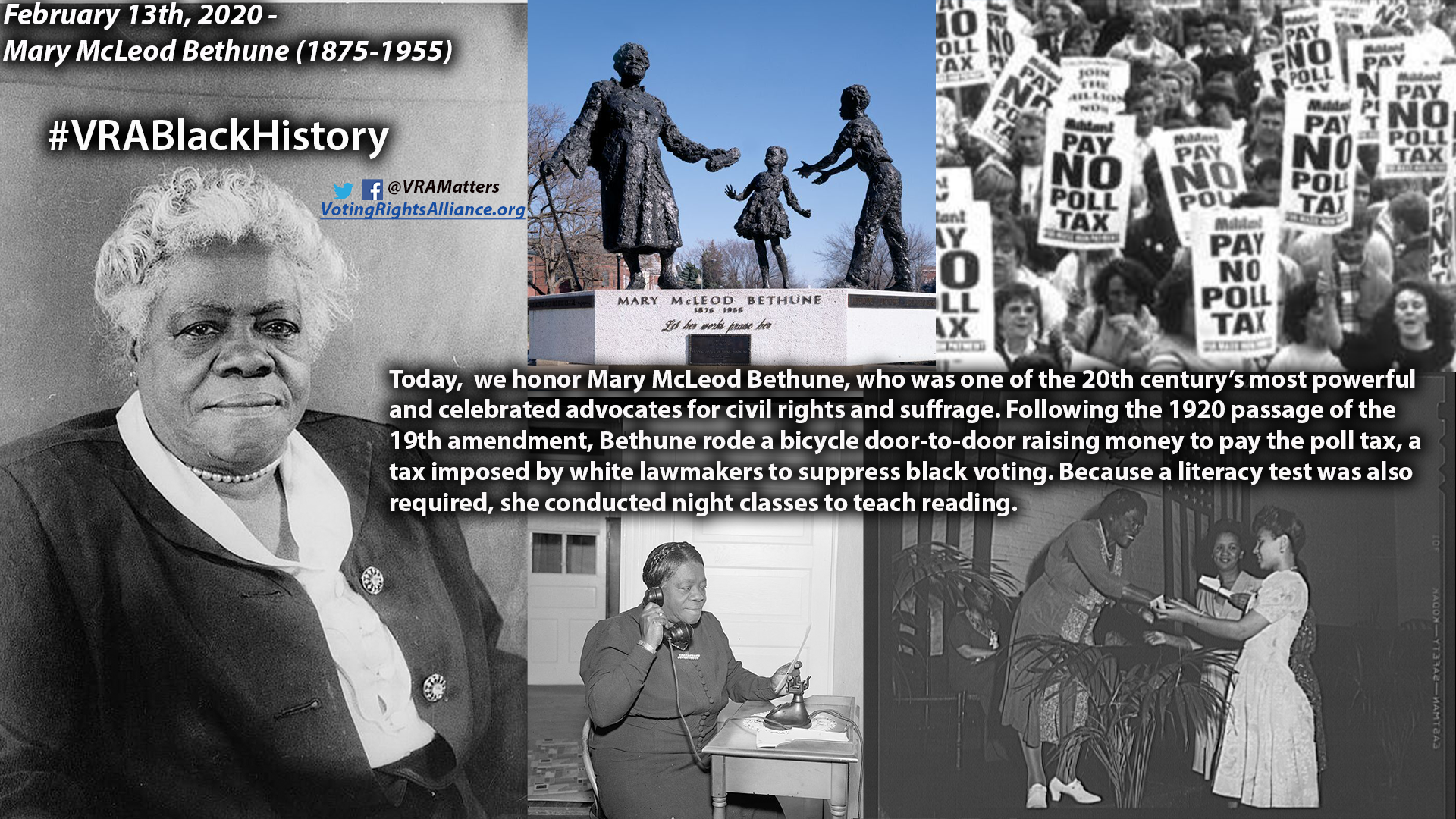
Today, we honor Mary McLeod Bethune, who was one of the 20th century’s most powerful and celebrated advocates for civil rights and suffrage.
Today, we honor the First National Conference of the Colored Women of America held in August 1895 in Boston, Massachusetts.
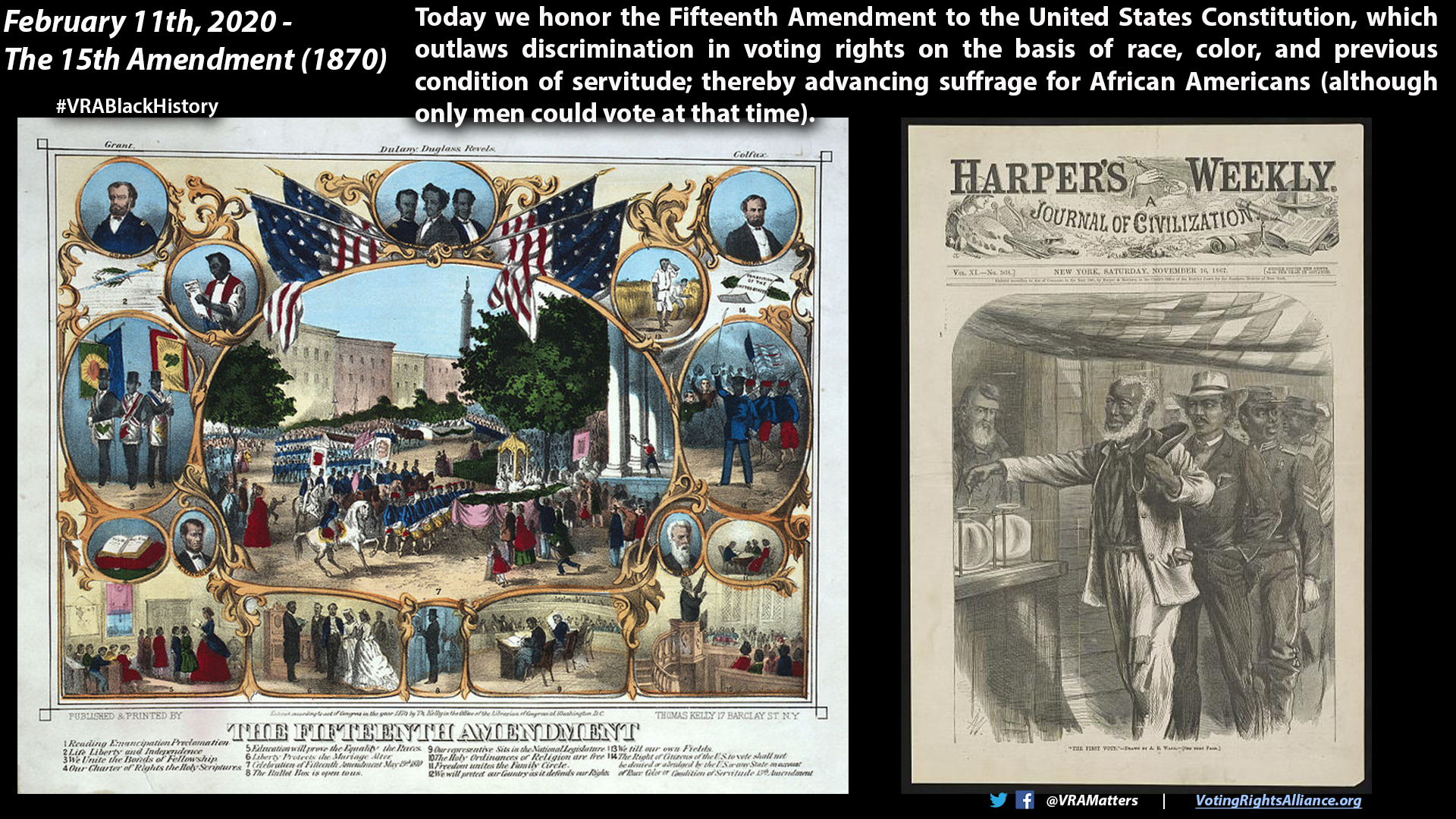
Today we honor the Fifteenth Amendment to the United States Constitution, which outlaws discrimination in voting rights on the basis of race, color, and previous condition of servitude; thereby advancing suffrage for African Americans (although only men could vote at that time).
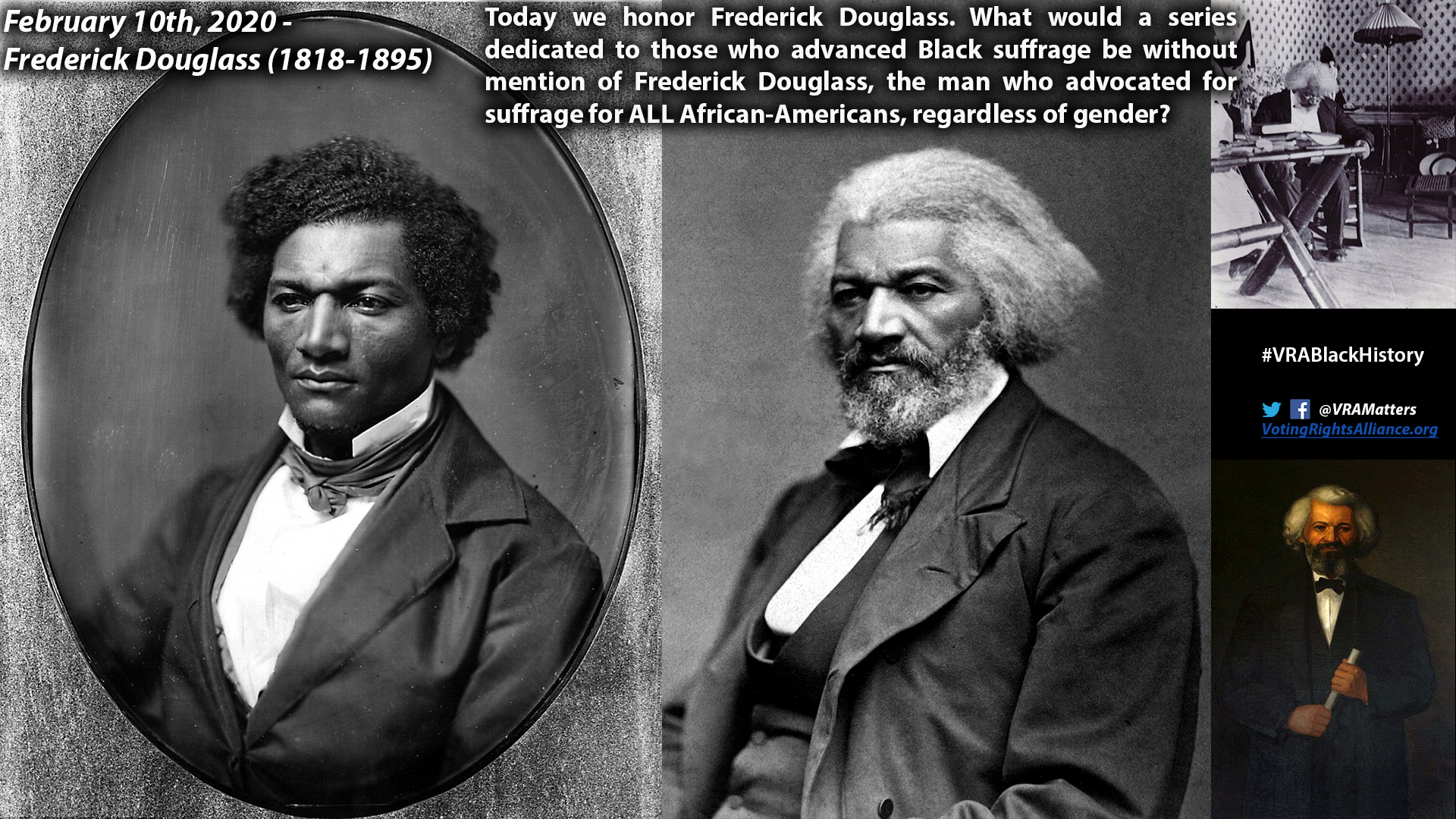
Today we honor Frederick Douglass. What would a series dedicated to those who advanced Black suffrage be without mention of Frederick Douglass, the man who advocated for suffrage for ALL African Americans, regardless of gender?
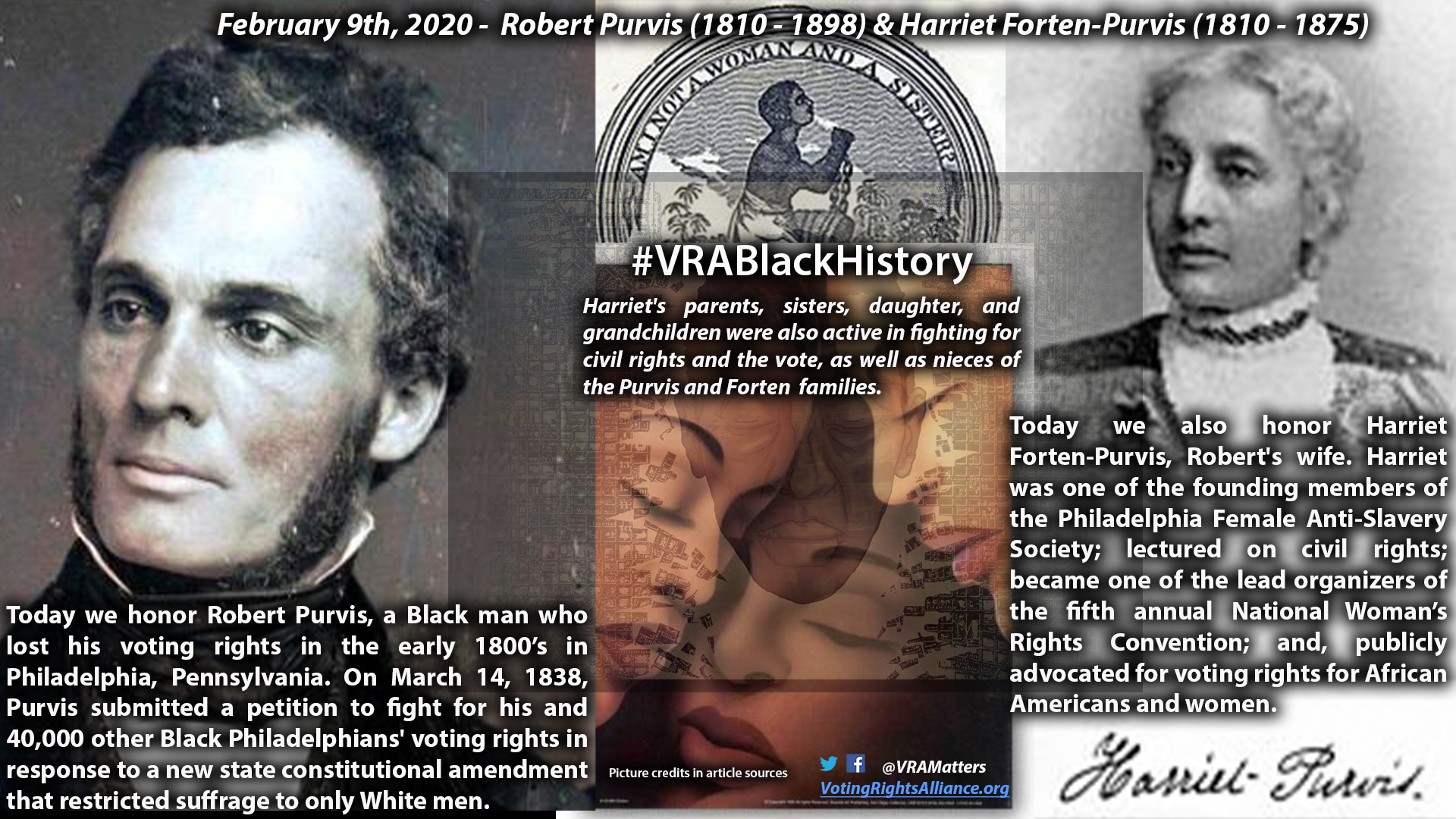
On February 9th, we honored both Robert Purvis, and his wife, Harriet Forten-Purvis. See their individual sections below to find out why!
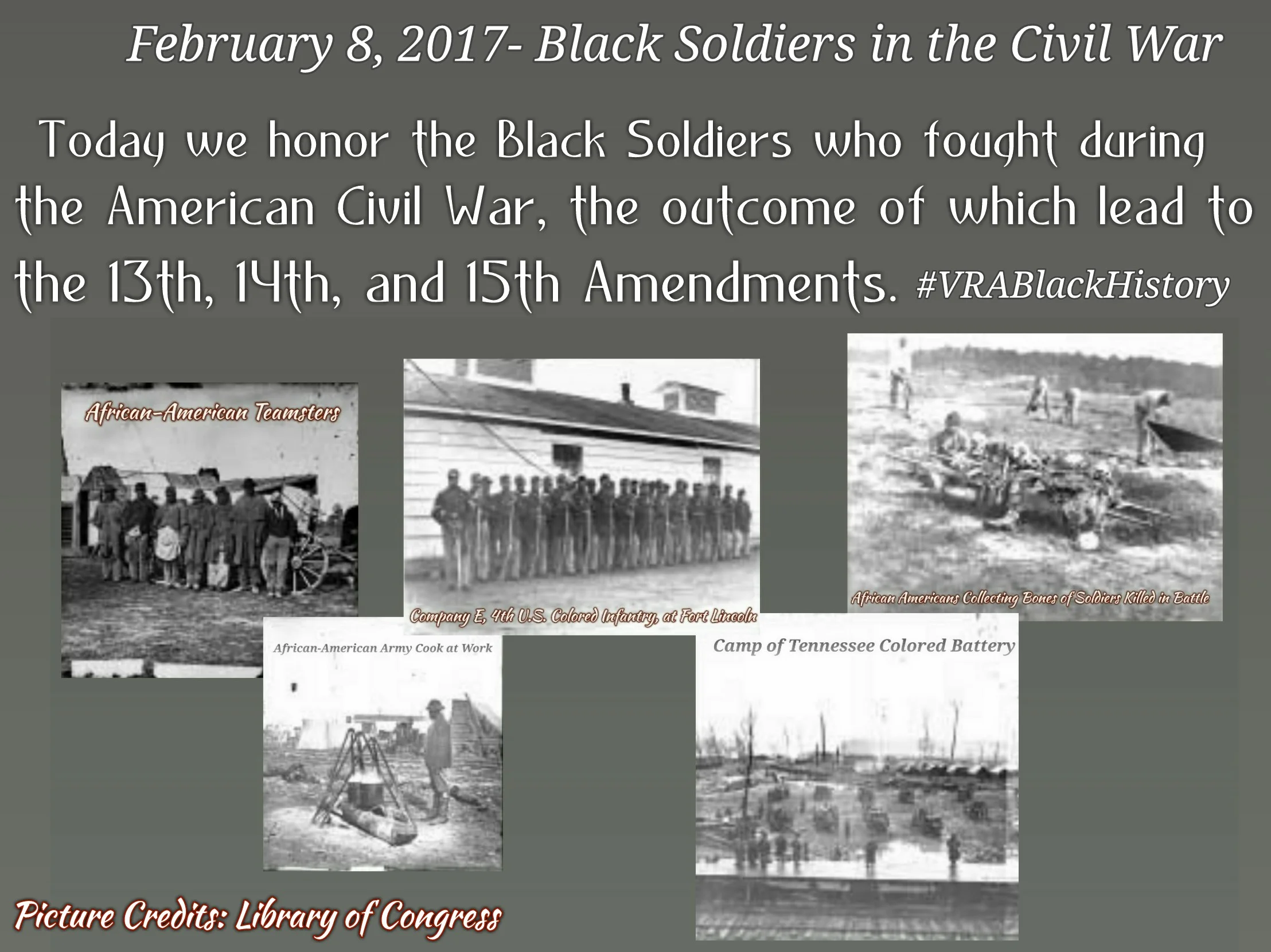
Today, we honor the Black soldiers who fought in the American Civil War, the outcome of which lead to the 13th, 14th, and 15th Amendments.
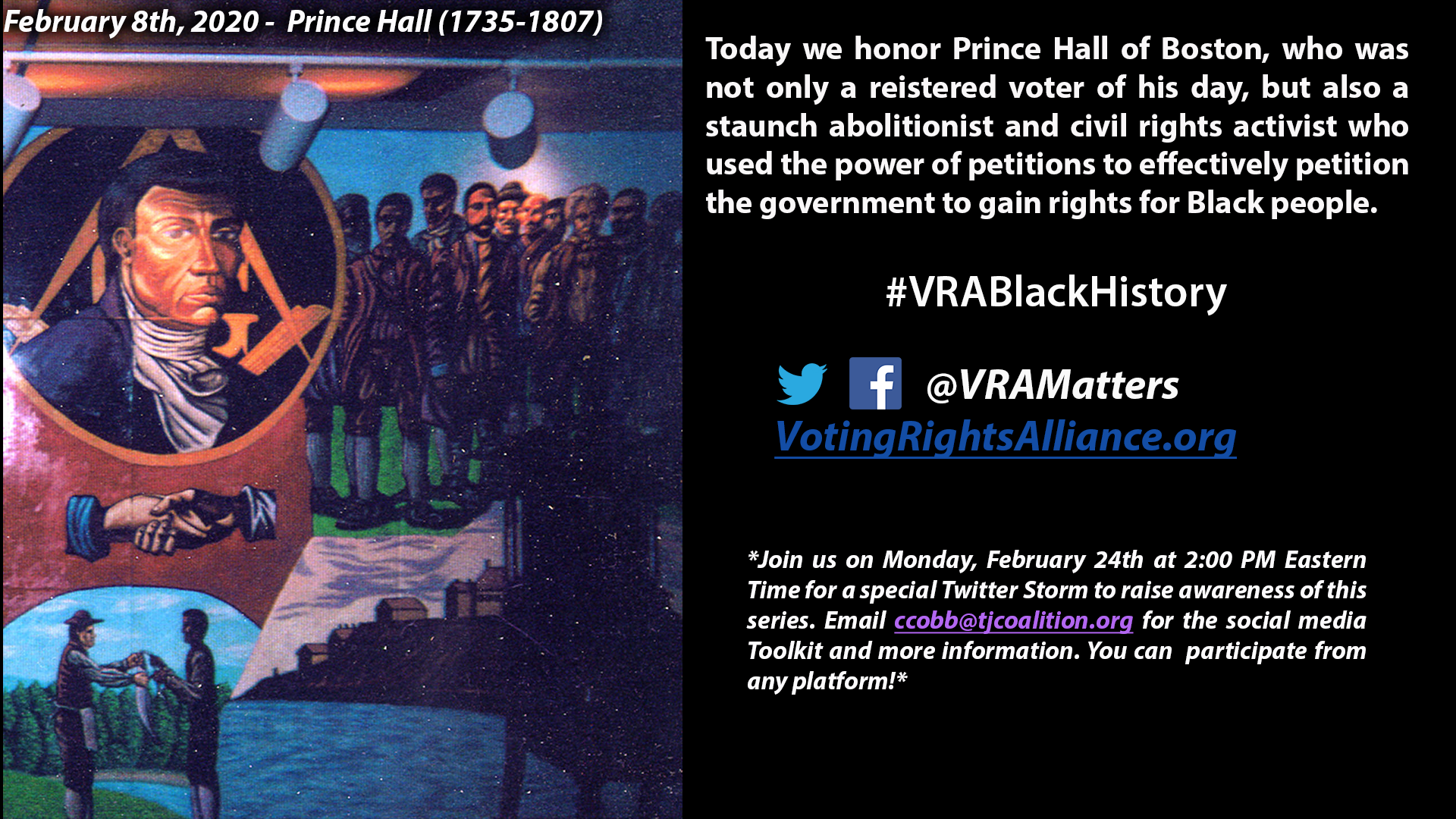
Today we honor Prince Hall of Boston, who was not only a registered voter of his day, but a staunch abolitionist and civil rights activist who used the power of petitions to effectively petition the government to gain rights for Blacks. This article exemplified the complexities of the fight for Black suffrage during a colonial era built on the immoral institution of slavery.
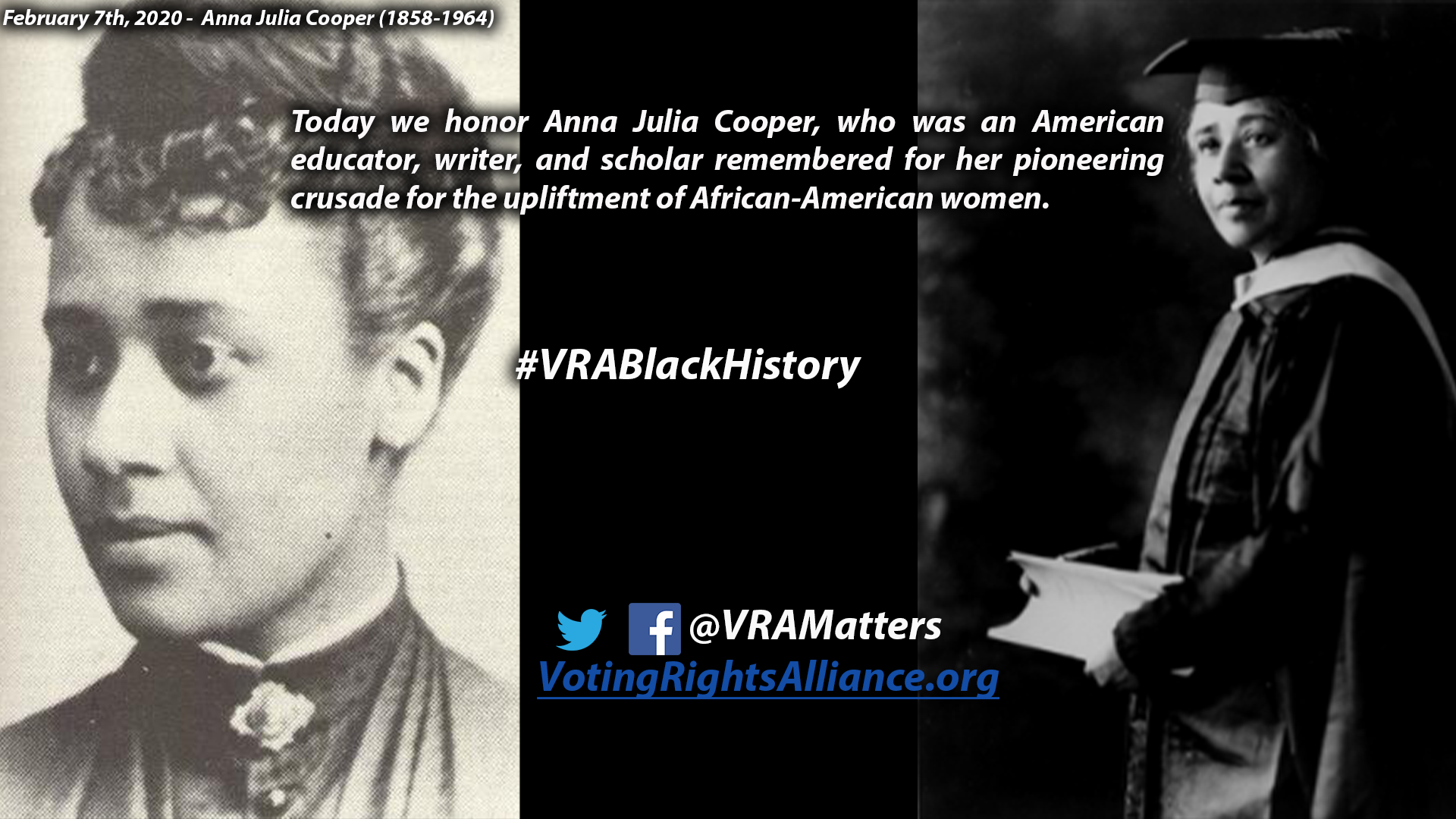
Today we honor Anna Julia Cooper, who was an American educator, writer, and scholar remembered for her pioneering crusade for the upliftment of African-American women.
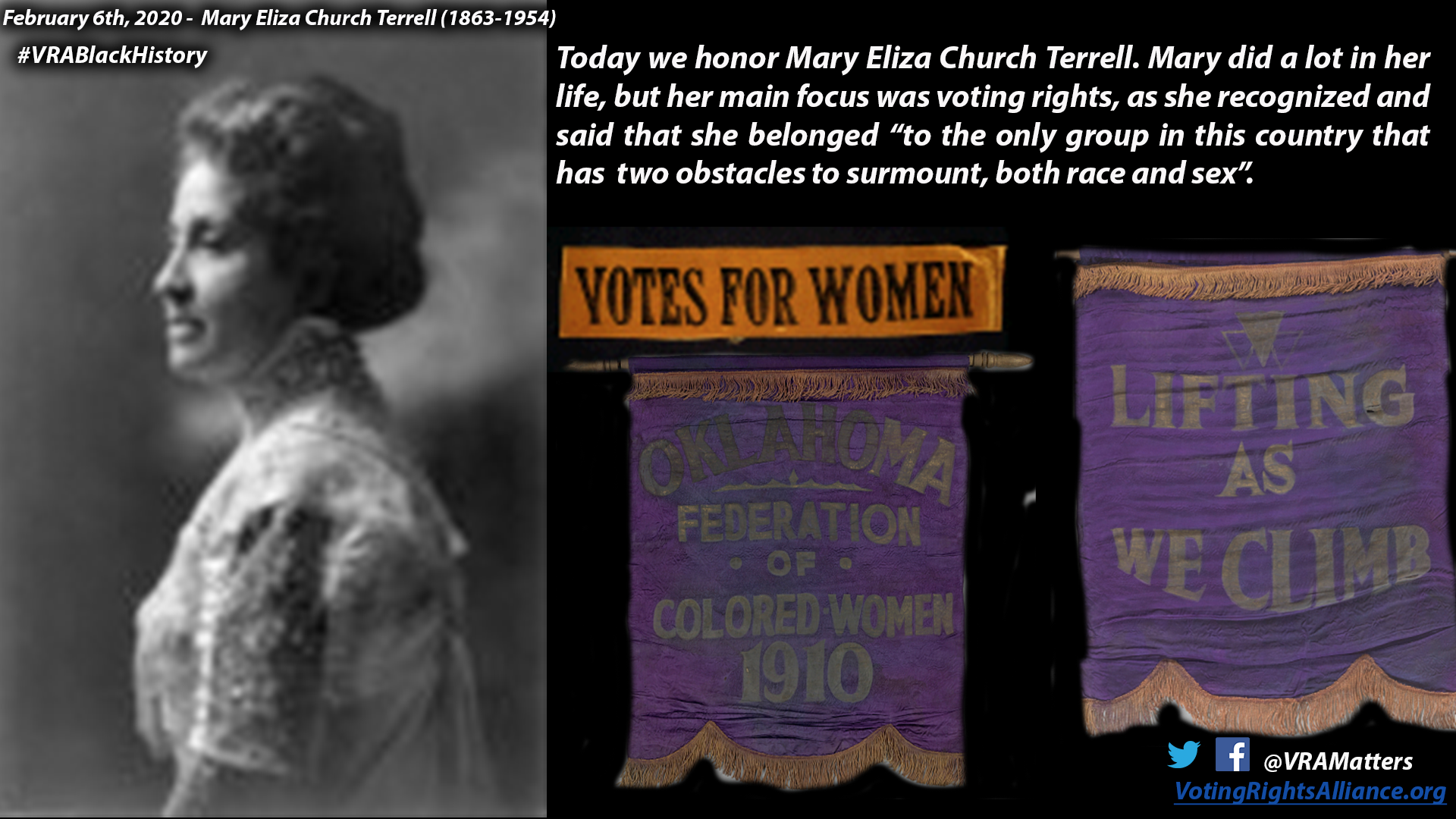
Today we honor Mary Eliza Church Terrell, a strong advocate for Black woman suffrage, often highlighting the struggles that Black women had to go through that White women didn’t.
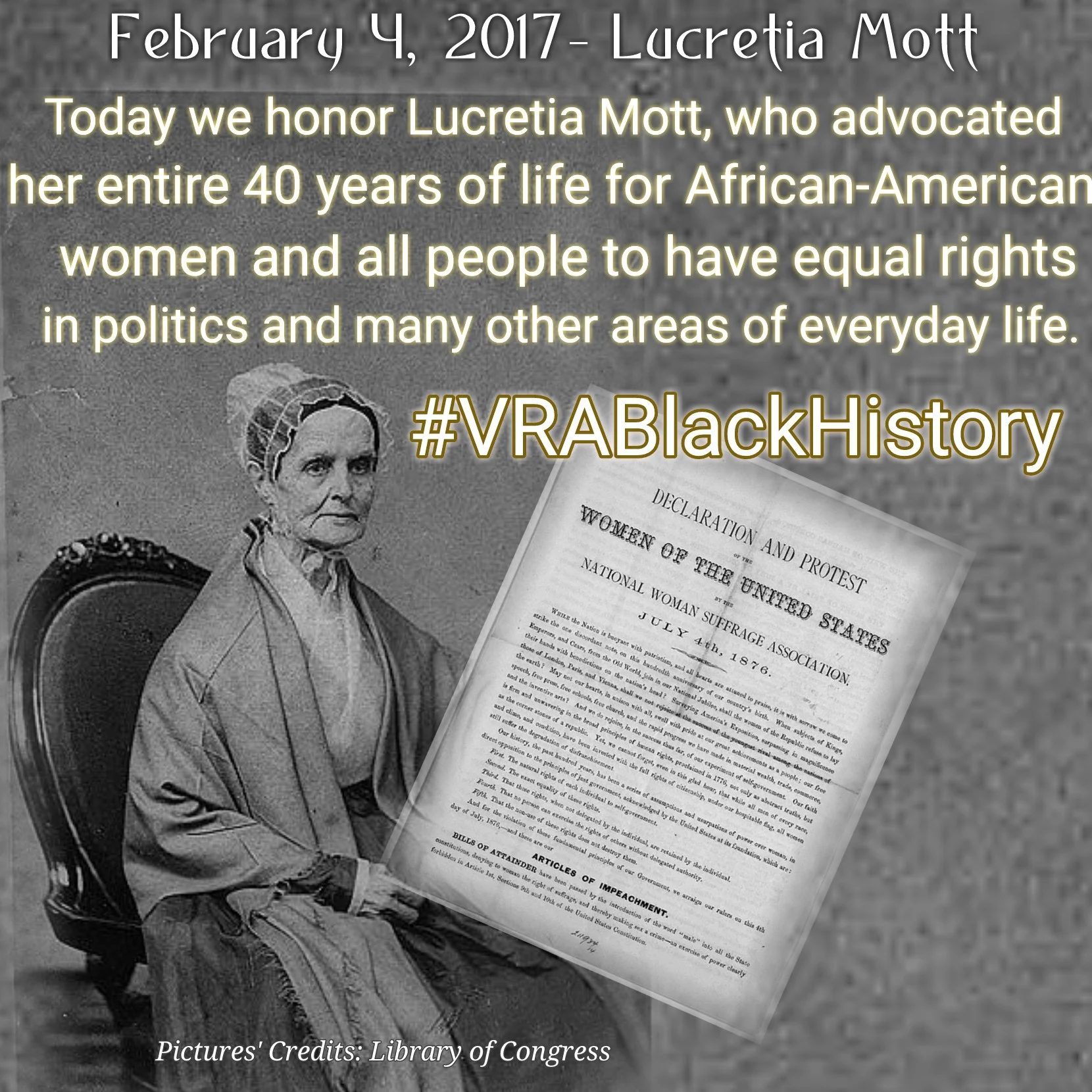
Today, we honor Lucretia Mott, who played a vital role in organizing the 1848 Women’s Right’s Convention at Seneca Falls, launching the woman’s suffrage movement.
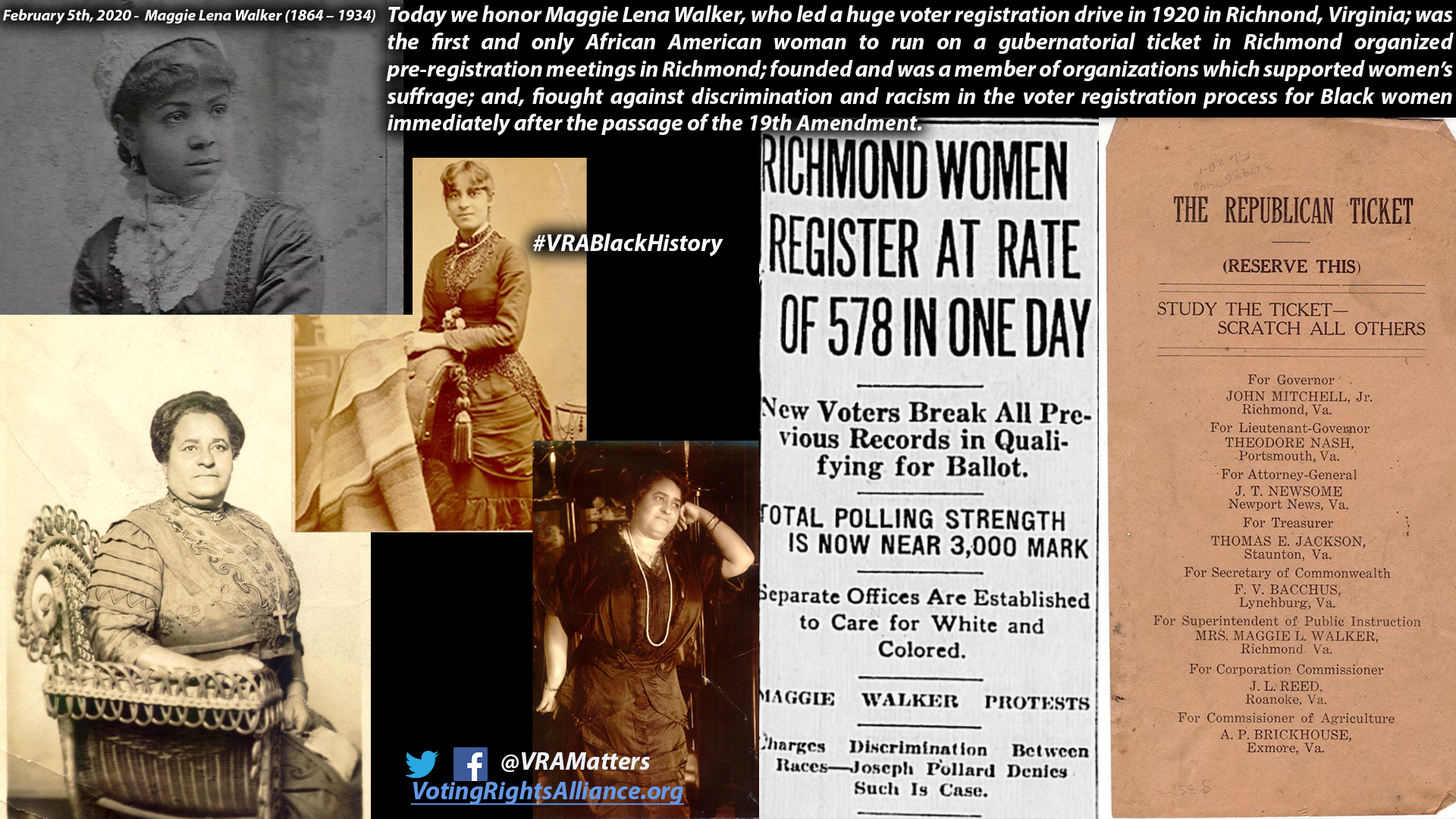
Today we honor Maggie Lena Walker who organized pre-registration meetings, resulting in the highest rate of African American women registered to vote in Richmond that year.
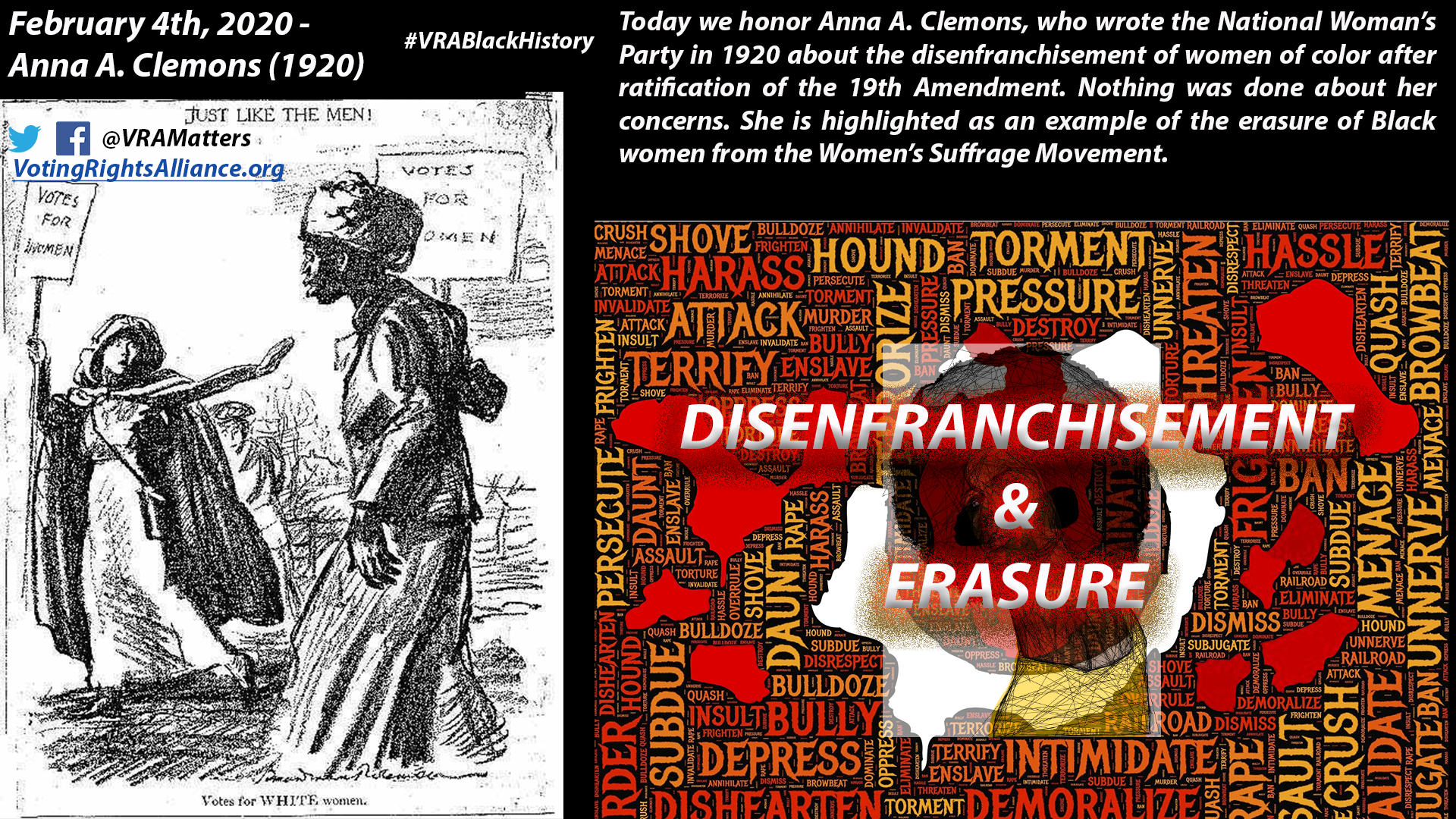
Today we honor Anna A. Clemons, who wrote the National Woman’s Party in 1920 about the disenfranchisement of women of color after ratification of the 19th Amendment. Nothing was done about her concerns.
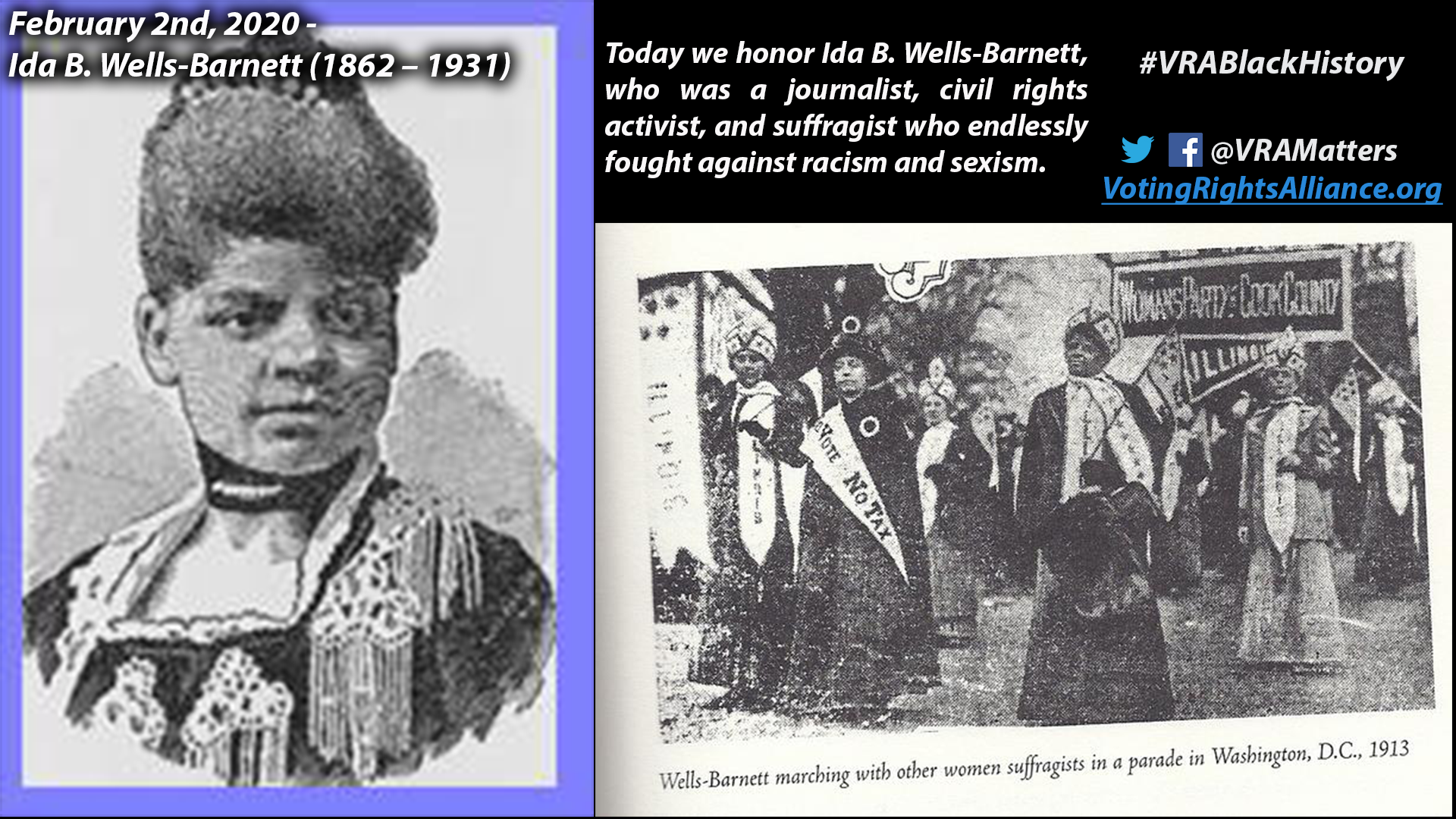
Learn about Ida B. Wells-Barnett, who was a journalist, civil rights activist, and suffragist who endlessly fought against racial and sexual discrimination.
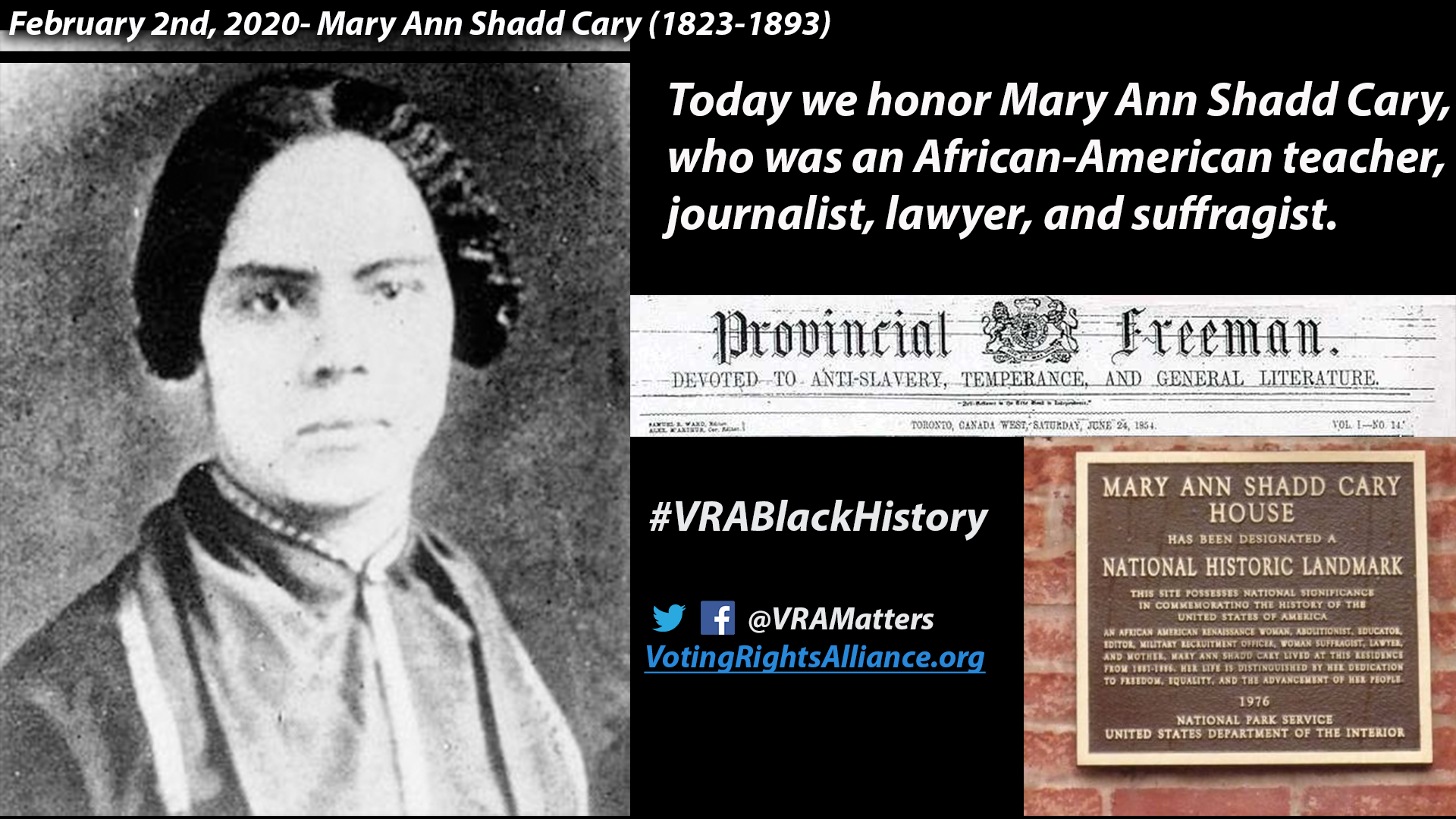
Today we honor Mary Ann Shadd Cary, who was an African-American teacher, journalist, lawyer, and suffragist.
Today we are educating about the rise of modern voter suppression. Our focus will be on the United State's Supreme Court's 2013 decision of Shelby County v. Holder, 570 U.S. 2 (2013), which ruled Section 4(b) of the Voting Rights Act of 1965 (VRA) unconstitutional.